our project
EN LA COCINA
CON MARCO
A scalable recipe platform that turns culinary content into a structured, searchable and SEO-ready digital experience.
FOQIRA transformed Cocina con Marco from a conventional recipe blog into a structured WordPress publishing platform. Recipes, ingredients and curated collections now work as connected content systems, helping visitors discover relevant dishes while allowing the editorial team to expand the website without rebuilding page layouts manually.
Project Metadata
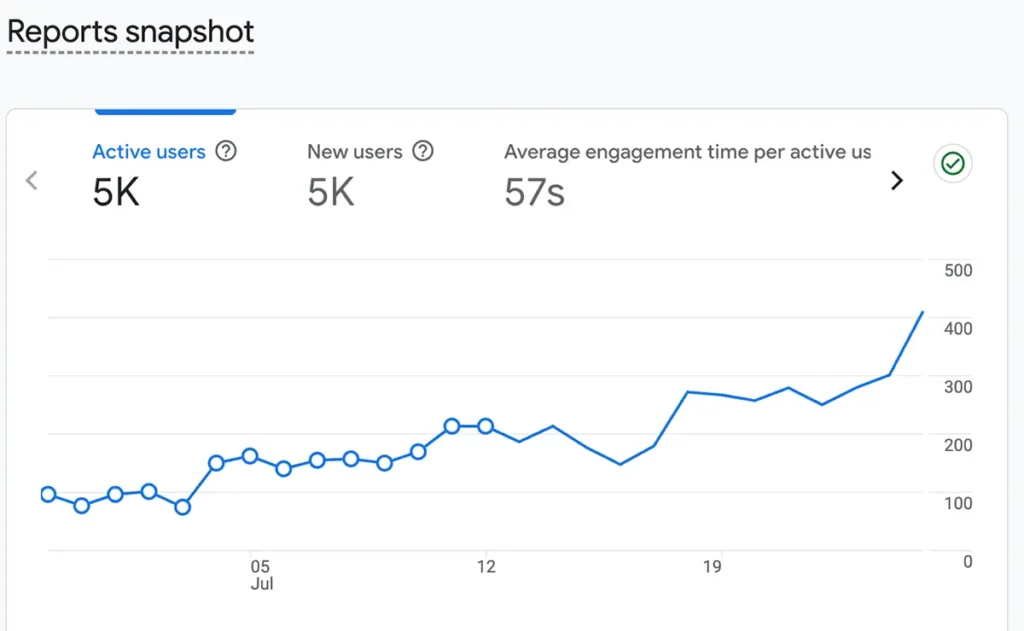
// Project Impact & Metrics
Results
That Scale
A structured culinary platform designed to support long-term traffic growth and efficient content production.
/01
100+
Published recipes
A growing recipe library presented through consistent dynamic templates.
/02
3
Connected content systems
Recipes, ingredients and curated collections work together as one platform.
/03
1
Reusable publishing workflow
New content can be added without manually rebuilding page layouts.
/04
280K+
Existing creator audience
The website provides an owned content platform for Marco’s established YouTube community.
// Business Context
From Recipe Blog to
Structured Culinary Platform
Marco Giancane brings a rare perspective to cooking: as both an Italian chef and a pharmacist, he explains authentic recipes with culinary precision and scientific clarity.
Target audience
Spanish-speaking home cooks looking for authentic, approachable recipes, especially Italian dishes explained through clear instructions, practical techniques and familiar ingredients.
The audience includes beginner and experienced home cooks who want reliable recipes, ingredient guidance and a deeper understanding of traditional Italian cooking.
Client Background
Marco Giancane is an Italian chef, pharmacist and culinary content creator who shares authentic recipes, practical cooking techniques and food knowledge with a large Spanish-speaking audience.
His approach combines culinary tradition with clear explanations and scientific precision. Through Cocina con Marco, visitors can discover authentic Italian recipes, understand ingredients and improve their cooking through practical, approachable guidance.
The website serves as Marco’s owned digital platform, bringing together his recipes, culinary knowledge and growing content library in one structured environment.
The Architectural Challenge
Cocina con Marco had a growing library of recipes, but the original website structure was not designed to support long-term editorial expansion.
Recipes were largely treated as individual posts. Ingredients, categories and thematic selections were not sufficiently connected, which limited the ways visitors could discover relevant content.
As the recipe library expanded, the website also needed a more efficient publishing workflow. New pages had to remain visually consistent without requiring the editorial team to recreate layouts manually.
The platform required a stronger technical foundation for structured content, internal linking, search visibility, recipe schema, advertising and future monetisation.
// Three Core Project Goals
The project focused on transforming a traditional food blog into a structured culinary publishing platform that would be easier to explore, manage and scale.
01
Make recipe discovery easier
Allow visitors to discover relevant recipes through categories, individual ingredients, curated collections and contextual internal links instead of relying only on chronological posts or general search.
02
Create a Scalable Publishing System
Build reusable content models and dynamic templates so new recipes, ingredients and collections can be published without manually designing every page.
03
Strengthen the SEO Foundation
Create consistent content structures, metadata, schema markup and relationships between content types to help search engines understand and index the website more effectively.
// Strategy & Information Architecture
Three Connected Content Layers
We reorganised Cocina con Marco around three connected content layers: recipes, ingredients and curated collections.
Instead of treating every recipe as an isolated article, the new structure connects each dish with relevant ingredients, culinary categories and thematic collections. This gives visitors several natural ways to explore the website while strengthening internal linking and content discoverability.
Reusable Bricks templates control the presentation of each content type, while structured WordPress and ACF fields keep editorial data separate from page design.
This approach creates a website that can grow as a publishing platform rather than becoming a collection of disconnected pages.
Information Architecture Blueprint
Recipes CPT (Cuatom Post Type)
Recipes are managed as a dedicated content type with structured fields for ingredients, quantities, units, preparation details and supporting information.
Dynamic templates ensure that every recipe follows a consistent layout while allowing the content library to expand without creating pages manually.
Ingredients Database Layer
Ingredients are connected to the recipes in which they appear, giving users another way to explore the website.
Visitors can search for a specific ingredient and discover relevant dishes, while ingredient pages create additional internal linking opportunities across the platform.
Culinary Taxonomy Categories
Categories organise recipes into familiar culinary groups and support broader browsing journeys.
Dynamic archive templates create consistent category pages that can include introductory content, featured recipes and automatically updated recipe listings.
Curated Themed Collections
Curated collections group recipes around practical themes, cooking occasions, techniques or ingredient families.
Unlike standard categories, collections create editorial journeys that help users discover related recipes in a more intentional and engaging way.
Author & Editorial Hub
The author section establishes Marco’s expertise as both an Italian chef and a pharmacist.
It connects his culinary background, teaching approach and existing content audience with the website, strengthening trust and supporting the platform’s editorial authority.
// Relational Data Architecture
Recipe
Pasta a la carbonara
Enfoque de diseño
The visual direction combines the warmth and personality of an independent food creator with the clarity required by a growing recipe library.
Food photography remains the primary visual element. Typography, spacing, cards and content hierarchy were designed to make recipes easy to scan and follow.
Reusable layouts create a consistent experience across recipe pages, ingredient archives, collections and search results without making the platform feel repetitive.
The design also supports advertising placements without allowing ads to dominate the reading experience.
Enfoque de desarrollo
The platform was developed with WordPress, Bricks Builder, Advanced Custom Fields and custom post types.
Recipe information is stored in structured fields rather than embedded inside manually designed pages. Dynamic Bricks templates retrieve this data and present it through consistent layouts across the website.
Custom PHP and JavaScript functionality support ingredient lists, contextual content output, ingredient-based discovery, structured data, internal search behaviour and URL migration.
The architecture separates content, design and functionality, making the platform easier to maintain and extend.
// interface & system gallery
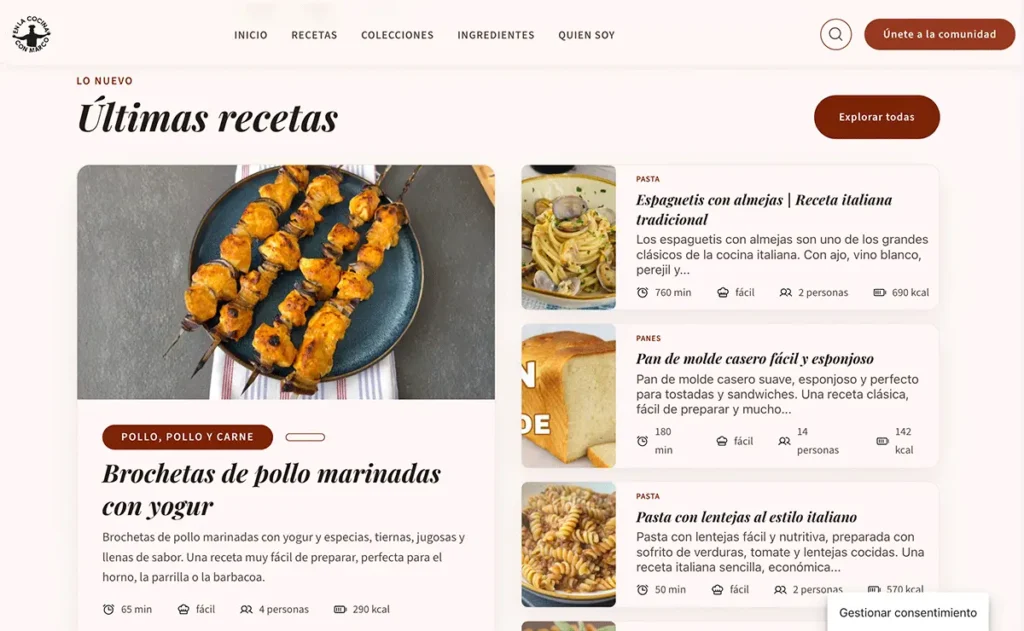
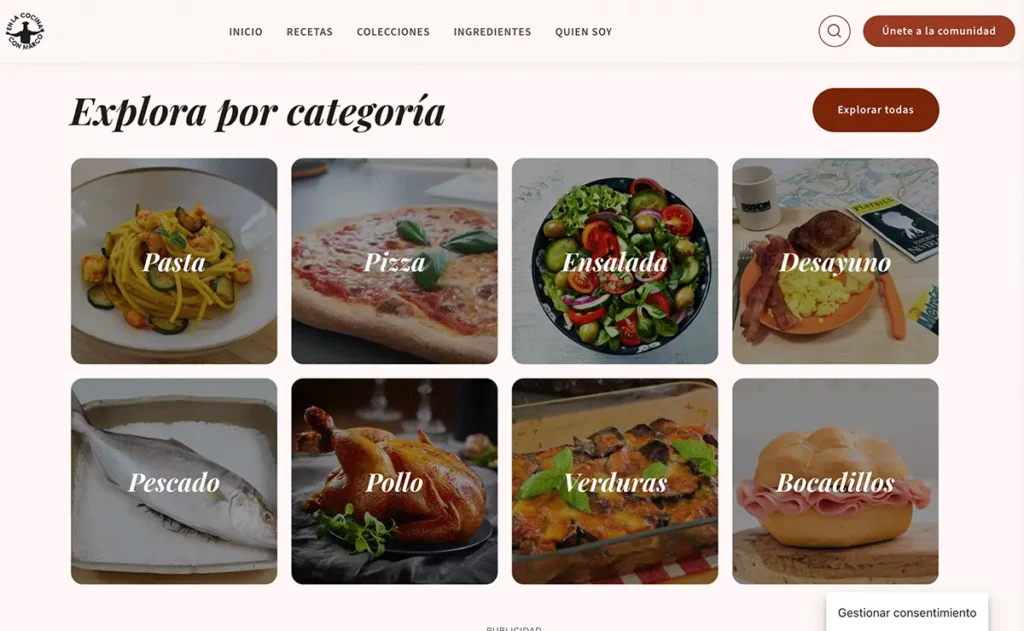
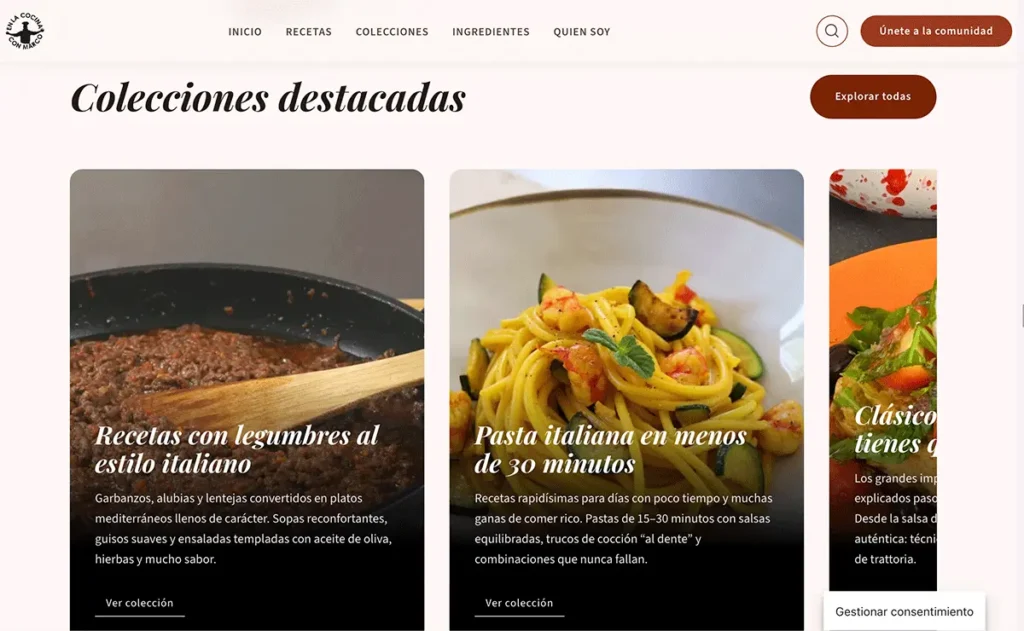
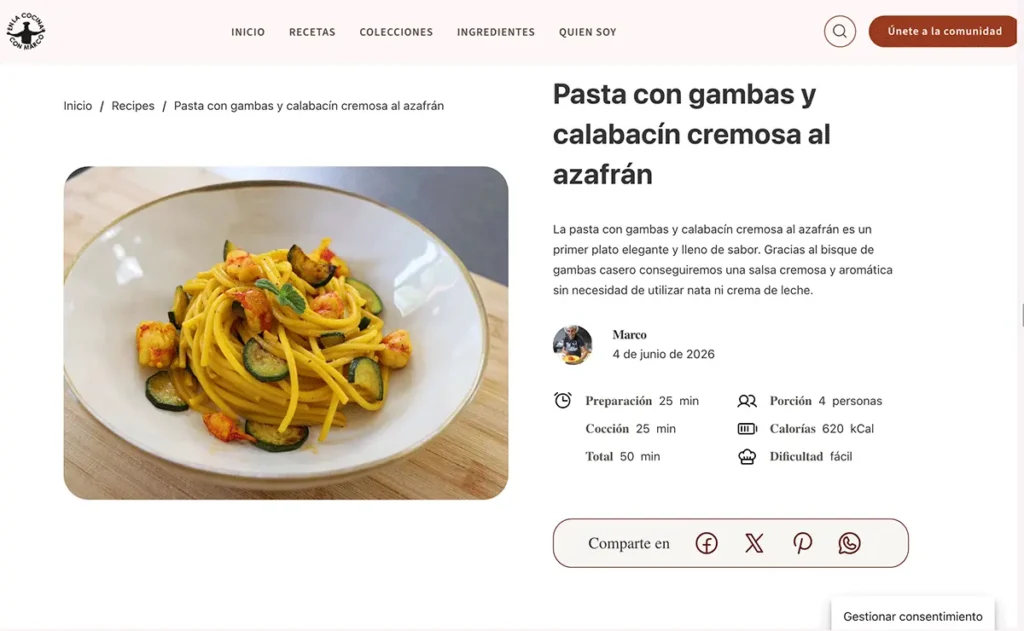
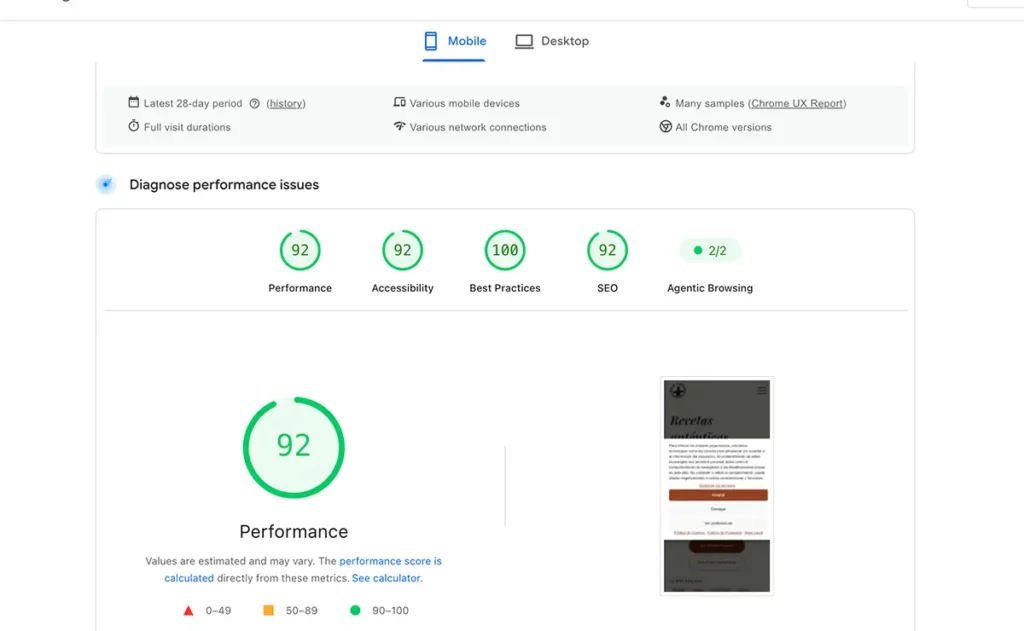
Platform Interface Gallery
Explore actual high-resolution interface views of the custom WordPress Bricks platform.
// Key Solutions Implemented
Engineered Solution Modules
Structured Recipe Content
Recipes were converted into a structured content model with dedicated fields for ingredients, quantities, units, preparation details and supporting information.
This creates consistent recipe pages, simplifies publishing and makes recipe data reusable across templates, search functions and structured data.
Ingredient-Based Discovery
A dedicated ingredient system connects individual ingredients with the recipes in which they appear.
Visitors can explore the website based on ingredients they already have or want to cook with, creating additional entry points into the recipe library.
Curated Recipe Collections
Bricks templates and reusable components control recipe cards, archive layouts, recipe pages, ingredient pages and calls to action.
This reduces duplicated work, maintains visual consistency and allows new content to be published without rebuilding layouts manually.
Reusable Dynamic Templates
Bricks templates and reusable components control recipe cards, archive layouts, recipe pages, ingredient pages and calls to action.
This reduces duplicated work, maintains visual consistency and allows new content to be published without rebuilding layouts manually.
// Before & After Transformation
Structural Upgrade
Content Structure & Relationships
before
Recipe content depended mainly on conventional posts, general categories and chronological navigation.
after
Recipes are now supported by dedicated ingredient pages, curated collections and contextual content relationships.
Business Benefit:
Visitors have more intuitive ways to explore the recipe library based on dishes, ingredients and culinary interests.
Scalability & Editorial Workflow
before
Expanding the content library risked creating inconsistent layouts, duplicated design work and increasingly difficult content management.
after
Reusable templates and structured fields maintain a consistent presentation across new recipes, ingredients and collections.
Business Benefit:
The editorial team can publish new content faster while maintaining design and structural consistency.
Ingredient-Based Discovery
before
The website offered limited ways to explore the relationship between dishes and the ingredients used to prepare them.
after
Visitors can search and browse recipes by ingredient, creating additional pathways into the content library.
Business Benefit:
Ingredient relationships improve content discoverability, internal linking and the depth of user journeys.
// Technical Implementation & Stack
Built as a System, Not Isolated Pages
The technical foundation combines WordPress, Bricks Builder, Advanced Custom Fields and custom PHP functionality.
Custom post types separate recipes, ingredients and collections into manageable content structures. Dynamic templates control how these content types are displayed, while taxonomies and relationships support browsing, contextual navigation and related content.
Custom functionality was implemented for structured ingredient lists, ingredient-based recipe discovery, dynamic FAQ content, recipe schema, specialised search behaviour and contextual content output.
Rank Math and custom schema output provide the technical SEO foundation. Redirects preserve important URLs during structural changes, while reusable classes and components improve maintainability and performance.
WordPress
Core content management and publishing platform used to manage recipes, ingredients, collections and editorial content.
Bricks Builder
Dynamic template engine used to create reusable page layouts, archive templates, cards and global components.
Advanced Custom Fields
Structured data layer used to manage recipe information, ingredients, quantities, metadata and supporting content.
Custom Post Types
Content architecture separating recipes, ingredients and collections into manageable publishing systems.
PHP & JavaScript
Custom search hooks, schema generator, and dynamic ingredient matcher
Rank Math + PHP
SEO and schema foundation used for metadata, indexing controls, XML sitemaps and structured data.
Google AdSense
Advertising integration designed to support monetisation while maintaining content usability.
Complianz
Cookie consent and privacy management for European and international website visitors.
Scalable for Future Monetisation and Multilingual Expansion
Cocina con Marco was built as a publishing system rather than a collection of individually designed pages.
Recipes, ingredients and collections are managed as structured content. Bricks templates determine how each content type is displayed, while global classes and reusable components control visual consistency.
This separation between content and layout allows the editorial team to publish new recipes without rebuilding page sections.
It also creates a foundation for future filters, advertising improvements, commercial partnerships, expanded collections, multilingual content and new digital products without replacing the underlying website.
// CLIENT TESTIMONIAL & VERIFIED REVIEW
Client Endorsement
"I've really enjoyed working with Alex. He is responsive, professional, and proactive. Instead of just completing the assigned tasks, he often proposes ideas to improve the website's performance, SEO, and security. Communication has always been easy, and he is willing to explain the reasoning behind his recommendations. I'm happy with our collaboration and would gladly recommend him."
// Delivered Scope
Full-Service Scope Executed
// Collaboration
{team_heading}
[ Next Steps ]